What a Cancer Camp for Families Can Change
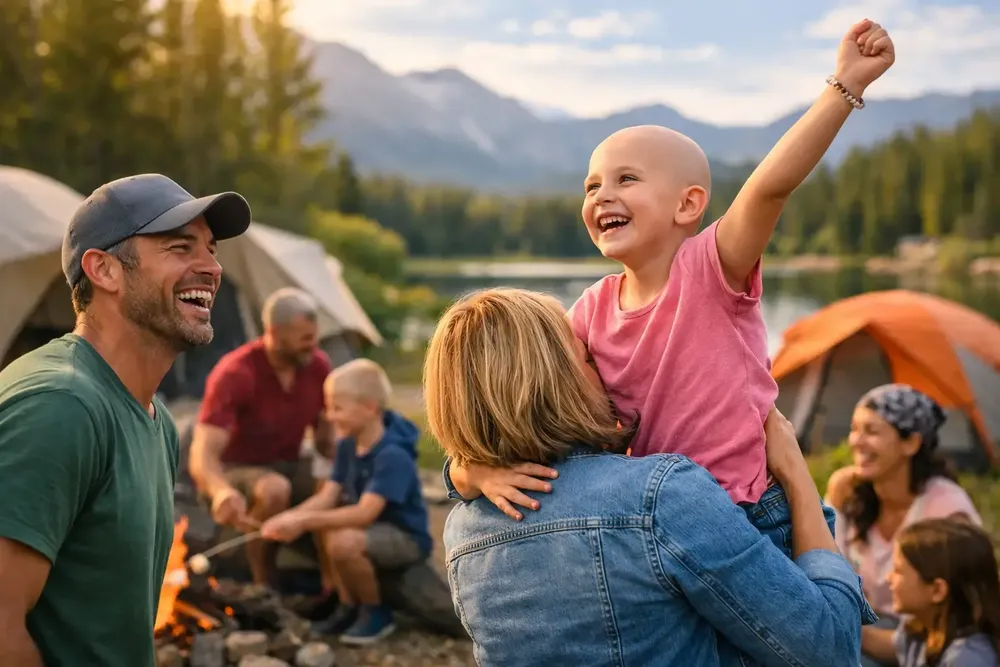
A hospital room can make a family feel like its entire identity has narrowed to appointments, medications, test results, and the next hard conversation. A cancer camp for families creates a different kind of space: one where people can breathe, laugh, speak honestly, and remember they are more than what cancer has asked them to carry.
That change matters. Cancer affects a whole household, not only the person receiving treatment. Partners may be holding fear and responsibility at the same time. Children may sense tension they cannot name. Caregivers can become so focused on getting everyone through the day that their own needs disappear from view. A family camp does not erase those realities, but it can offer something powerful: time together with less pressure to pretend that everything is fine.
Why a cancer camp for families matters
When cancer enters a family, routines often become survival systems. Someone manages transportation. Someone keeps track of prescriptions. Someone tries to make dinner feel normal. Someone else stays quiet because they do not want to add another worry. Each role may be necessary, but over time, those roles can keep family members from expressing what they truly need.
A cancer camp for families gives everyone permission to step outside those patterns, even briefly. The person with cancer is not expected to be the patient all day. The caregiver is not expected to organize every detail. Children and teens are not asked to be unusually brave or mature. Families can simply be together, with room for both joy and truth.
This is not about forcing positivity. Real resilience is not smiling through pain or insisting that every difficult experience has a silver lining. Resilience is the capacity to stay connected to yourself and the people you love while moving through uncertainty. It is learning how to acknowledge what hurts without allowing fear to make every decision.
Connection is not a luxury during cancer
Families affected by cancer often receive practical advice: eat well, attend follow-up appointments, ask questions, rest when possible. Those actions matter. Yet connection can be just as essential to a family’s ability to endure and recover.
At camp, connection may look simple. It might be a parent watching their child play without checking the time. It may be siblings meeting other siblings who understand why life at home feels different. It could be a quiet conversation between partners who have spent months talking only about logistics.
These moments are not small. They remind families that they are still allowed to create memories, experience lightness, and feel close to one another. Illness can take up enormous space, but it does not have to take every space.
A well-designed family camp also reduces isolation. People may love and support a family facing cancer, yet still struggle to understand the daily emotional weight of scans, side effects, setbacks, recovery, and waiting. Being around others who do understand can lower the burden of explanation. Families do not have to translate every feeling before it can be received.
What families can gain from a shared camp experience
The value of camp is not measured by whether every participant has a breakthrough moment. Sometimes the most meaningful outcome is a child realizing they are not alone. Sometimes it is a caregiver taking a full breath. Sometimes it is a family having fun together without guilt.
A strong camp experience can support several parts of family resilience at once:
- Belonging: Families meet others who recognize the complexity of cancer without needing a detailed explanation.
- Emotional language: Children, teens, and adults can find safer ways to name fear, anger, hope, and grief.
- Shared memories: Joyful experiences give families something to hold alongside the difficult chapters.
- Practical confidence: Structured activities can help people practice communication, self-awareness, and coping skills they can carry home.
- Renewed perspective: Time away from ordinary routines can help a family recognize what is working, what needs support, and what matters most now.
The impact looks different for every family. A newly diagnosed family may need reassurance and community. A family in active treatment may need rest and permission to have a good day. A survivor and their loved ones may be learning how to live after treatment, when others assume the crisis has passed but uncertainty still lingers.
There is no single right time to seek a camp experience. The right fit depends on a family’s energy, medical needs, current circumstances, and readiness to participate. Medical guidance and individual limitations should always be respected. The goal is not to add another obligation. The goal is to offer meaningful support.
A camp should hold both joy and honesty
Families do not need another setting where they feel pressured to perform gratitude. They need a setting that makes room for the full human experience.
That means joy can be welcome without denying sadness. A child can be excited about an activity and still be scared about a parent’s treatment. A survivor can feel proud of how far they have come and still feel anxious before a scan. A caregiver can be deeply devoted and completely exhausted.
When these experiences are normalized, shame loses some of its power. People begin to understand that mixed emotions are not a failure of strength. They are often a sign that someone is living through something that matters.
This is one reason structured camp programming is so valuable. Purposeful activities, guided reflection, creative expression, movement, and shared recreation can help families reconnect without demanding that they sit down and solve every hard issue at once. For some people, a conversation begins while walking. For others, connection returns through laughter or a team activity. The pathway matters less than the opportunity to show up as a whole person.
How to make the benefits last after camp
The transition home can be challenging. Camp may feel spacious and supportive, while home brings back appointments, work demands, school schedules, and the familiar pull of responsibility. Families can protect the value of the experience by choosing a few small practices to continue.
Start with one regular check-in. It does not need to be formal or lengthy. A weekly question such as, “What has felt heavy this week?” or “What helped you feel supported?” can make it easier for everyone to speak before stress builds up.
Keep one shared ritual from camp alive. It could be an evening walk, a game night, a gratitude practice, a favorite song during breakfast, or a few minutes of quiet connection before bed. Small rituals matter because they tell a family, “We are still making room for us.”
It also helps to notice when the family slips back into silence. Silence is understandable, especially when people want to protect one another. But protection can become distance when no one feels able to say what is real. A gentle, direct sentence can reopen connection: “I know we have all been carrying a lot. I want us to keep talking.”
Hope becomes stronger when it is practiced
Hope is not wishful thinking. It is not a demand to feel cheerful when life is hard. Hope is a practice of returning to what is possible: one honest conversation, one supported child, one day of rest, one moment of laughter, one next step.
Programs such as the Rise Family Cancer Camp are built around that belief. Families deserve more than encouragement from a distance. They deserve spaces where courage is supported, where connection is protected, and where resilience is practiced together.
Cancer may change a family’s path, but it does not get to define the full story. Even in the middle of uncertainty, families can create moments of belonging, strength, and joy. Those moments do not remove the hard road ahead. They help people rise and walk it together.